Step 01
Identify live friction
We map current tasks, handoffs, and blockers to decide what to build next while the system is still taking shape.
NeonTerra Flux is being built now as an independent software project focused on practical tools for everyday operations. Our current work includes low-code workflows, automation helpers, and organized systems designed to stay clear and useful.
Our process is transparent by design: define real problems, release practical steps, and refine continuously through feedback. Each update moves NeonTerra Flux toward a dependable ecosystem that stays simple and honest as it grows.
We clearly show what is being built now, what is still evolving, and why each next step matters.
Current releases are intentional building blocks, shaped by practical use and continuous refinement.
CURRENTLY IN ACTIVE DEVELOPMENT
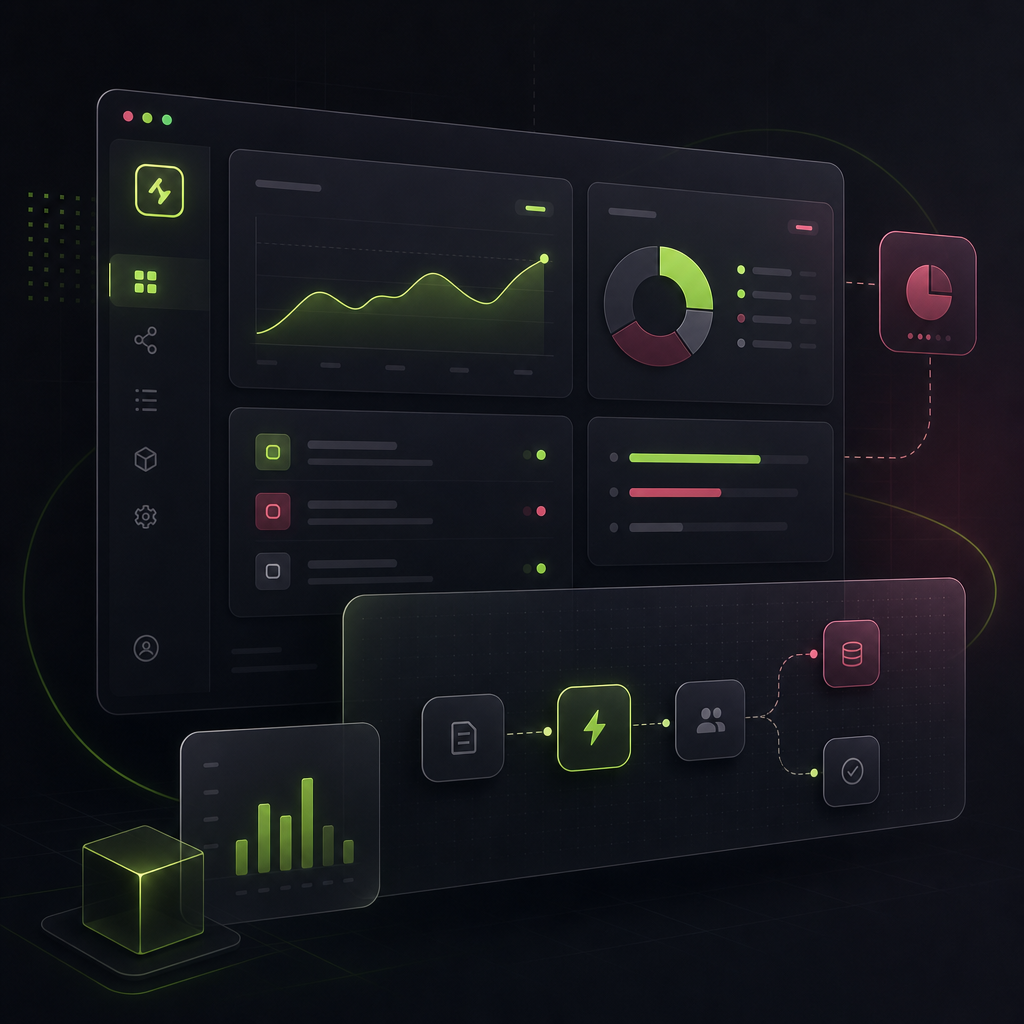
NeonTerra Flux is currently being built inside real operating environments. We identify daily friction, ship focused improvements in small increments, and refine each part through direct feedback. The vision is long-term, and the progress is step by step.
Step 01
We map current tasks, handoffs, and blockers to decide what to build next while the system is still taking shape.
Step 02
We create low-code prototypes and run them in limited, practical scenarios before wider rollout.
Step 03
Feedback from real use guides adjustments to logic, automation, and everyday usability.
Step 04
We document progress and extend the project carefully as NeonTerra Flux continues to evolve.